

Crafting Your Perfect Smile with Veneers in Orlando, FL
What makes a smile beautiful? That’s a complex question, but some qualities of a lovely smile are immediately identifiable: good tooth color, shape and alignment are a few of the most important ones. If your teeth could use improvement in any of these categories, porcelain veneers could be just what you’re looking for.
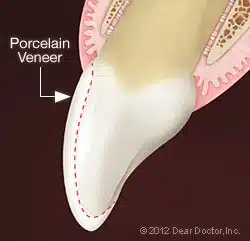
You may already know that a veneer is a thin covering over another surface. In dentistry, a veneer is a wafer-thin layer of super-strong porcelain that convincingly substitutes for natural tooth enamel. When bonded to your teeth, veneers can create a natural-looking, beautiful new surface. That’s because dental porcelain, like natural tooth enamel, is translucent and tough. But it doesn’t stain like tooth enamel does.
Recent years have brought remarkable advances in dental porcelain technology. These days, veneers can be made so thin that they can sometimes be bonded directly onto your existing tooth surface. In other cases, a very thin layer of tooth enamel — as thin as the veneer itself — needs to be removed to fit the new porcelain surface and make it look as lifelike as possible. Either way, the results are sure to make you smile.
Versatility of Porcelain Veneers
Veneers can be used to improve any of the following characteristics of your teeth:
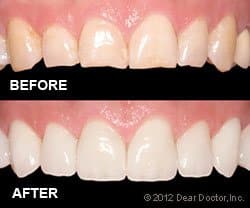
- Color — Teeth can become stained by the foods and drinks we like, from smoking, and even normal aging. Veneers are available in numerous shades, from the most natural to the brightest Hollywood white.
- Size & Shape — Teeth can become worn down from grinding habits, or may not have the shape or size you want to begin with. For example, some people consider rounder teeth more feminine and squarer teeth more masculine. Veneers can be shaped and sized in whichever way is most flattering to your face.
- Alignment & Spacing — Veneers can be used to close small gaps between teeth or make slight corrections in alignment while improving tooth color and shape.
Limitations of Porcelain Veneers
There are some situations in which veneers would be inappropriate. For example, if you have significantly misaligned teeth or a large gap, orthodontics might be a more appropriate solution than veneers. And if you have lost a lot of tooth structure from decay or trauma (or a particularly severe grinding habit), it might be better to restore your teeth with porcelain crowns that cover the entire tooth.
Creating a New Smile with Porcelain Veneers
The first step in creating a new smile with porcelain veneers is to communicate exactly what you don’t like about your smile as it is now. It’s a great idea to bring in pictures of smiles you do like, as a starting point for discussion. It’s possible to see how veneers would look on your teeth in one of several ways. A model of your teeth can be created over which wax “veneers” can be placed; sometimes acrylic (plastic) or tooth-colored filling material can be placed directly onto your teeth to demonstrate the effect veneers would have on them.
Once the plan has been agreed upon, your teeth will be prepared by removing a small amount of enamel, if this step is necessary. Molds of your teeth will be taken and used by a skilled dental laboratory to create your veneers, and you will receive a temporary set of veneers to wear during the few weeks it will take to create your permanent veneers. When the veneers come back from the lab, they will be cemented onto your teeth.
Caring for Your Veneers
Just like the teeth nature gave you, teeth restored with veneers need gentle brushing and flossing every day. This will remove dental plaque and ensure good gum tissue health around the veneers. Regular checkups at the dental office will remain as important as always to your oral and general health. And keep in mind that as tough as veneers are, they may not be able to withstand forces that come from using your teeth as tools (to open packages, for example) or biting into very hard foods like candy apples — which isn’t good for your natural teeth, either! And if you grind or clench your teeth at night, you might be advised to get a custom-made nightguard to protect your veneers — and your investment.
Interested in learning more? Contact us or schedule an appointment today. Your smile will thank you!
Frequently Asked Questions about Veneers
How long do porcelain veneers typically last before they need to be replaced?
Porcelain veneers typically last around 10 to 15 years with proper care, and many last even longer before needing replacement. How long yours lasts depends on your bite, oral hygiene habits, and whether you grind your teeth, which is why a nightguard is often recommended for patients who clench or grind.
Do porcelain veneers stain over time from things like coffee or wine?
Porcelain itself resists staining much better than natural tooth enamel, so veneers generally keep their color well over time. The thin cement line at the edge of the veneer can pick up stains from coffee, wine, or tobacco, which is why maintaining good oral hygiene and regular checkups helps veneers look their best.
Is getting veneers painful, and is the procedure reversible?
Getting veneers involves numbing the area, so most patients feel little to no pain during tooth preparation, though mild sensitivity afterward is common for a few days. The procedure is generally not reversible, since a thin layer of enamel is removed to fit the veneer, so it’s worth discussing this permanence with your dentist before moving forward.
What's the difference between porcelain veneers and Lumineers?
Lumineers are a type of very thin veneer which generally need only a small amount of enamel to be removed, thus making the procedure more reversible, in contrast to traditional porcelain veneers which are a bit thicker and usually involve the removal of some enamel in order to achieve a natural appearance. Although traditional veneers are able to correct a broader range of cosmetic problems, Lumineers are most suitable for making minor adjustments to the colour or shape.
How many veneers do most people get for a full smile makeover?
Most smile makeovers involve the use of between six and ten veneers, generally covering the upper front teeth since these are the ones that are most visible when you smile, although in some cases patients select fewer in order to treat a single problematic tooth or go for more to include the lower arch. The correct number for you will be suggested by your dentist according to your smile line and particular concerns.
Is there a minimum age for getting porcelain veneers?
Most dentists recommend waiting until a patient’s teeth and gums have fully matured, generally around age 18, since veneers require permanent removal of some enamel, and younger patients’ teeth are still developing and prone to further shifting. Younger patients with cosmetic concerns are usually offered more conservative or reversible options first.
Where can I find a cosmetic dentist for porcelain veneers near Dr. Phillips in Orlando, FL?
Dental Flossophy, located at 7575 Dr. Phillips Blvd. #160 in Orlando, FL, offers porcelain veneers to correct color, size, and shape issues, as well as minor spacing issues. Call (407) 363-0365 to schedule a consultation, where you can bring reference photos to help the team understand the smile you’re hoping for.