

Enhance Your Smile with Removable Dentures in Orlando, FL
Full or partial tooth loss, if left untreated, doesn’t just affect a person’s self-image — it can also increase the risk of developing nutritional problems and other systemic health disorders. Fortunately, there’s a reliable and time-tested method for treating this condition: full or partial dentures.
Dentures are just one option for replacing missing teeth; some of the others include fixed bridgework and dental implants. Each method has its particular pluses and minuses, which should be carefully considered. There are also several varieties of dentures available to address specific issues, from partial dentures to implant-supported overdentures. The best option for you will depend on your individual situation.
How Do Removable Dentures Work?
Full or partial dentures consist of a gum-colored base made of plastic resin, which fits over the remaining alveolar (bone) ridge that formerly held the teeth. The prosthetic teeth projecting from the base are designed to look and function just like your natural teeth. Dentures are held in place primarily by the suctioning effect of their close fit against the alveolar ridges — that’s why it’s so important that they are fitted properly. The upper denture also gets extra support from the large surface area of the roof of the mouth (palate), which generally makes it extremely stable.
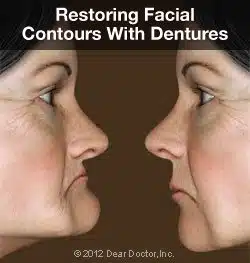
At first, wearing dentures may require some getting used to in terms of talking and eating, as the dentures become “balanced” in the space formerly occupied by the teeth. But over time, the muscles, nerves and ligaments of the mouth learn to work in new ways, which allows these functions to occur normally. Dentures also help support the facial skeleton and the soft tissues of the lips and cheeks, which can help create a more youthful appearance.
Types of Full Dentures
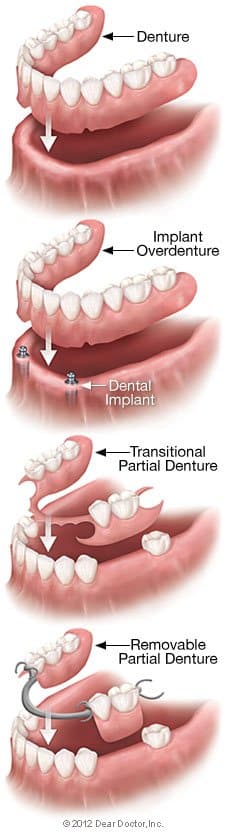
Immediate Dentures: These are usually a temporary means of helping you transition to successful denture wearing. Because of the muscular readjustment required, as well as the natural shrinkage of gums, the dentures which are placed immediately after tooth extraction won’t fit as well as permanent dentures made when the healing is complete. They do, however, provide you with new teeth right away, and give you time to adjust.
Conventional Full Dentures: After a period of time, permanent dentures that conform to your mouth with near-perfect accuracy can be fabricated. These are carefully crafted to look as much like your own natural teeth as possible, and are able to function properly in your mouth for a long time.
Implant-Supported Overdentures: To increase the stability of a lower or upper denture, it’s possible for it to be securely anchored using two or more dental implants. The upper jaw requires more implants (generally three or more) than the lower jaw due to a lesser bone density. Many people find this option offers a great balance of comfort, functionality and value.
Types of Partial Dentures
Transitional Partial Dentures: These relatively inexpensive removable plastic dentures serve as a temporary tooth replacement and space maintainer as you wait for your mouth to heal from tooth extraction, for example. Once the healing process is complete, dental implants can be placed.
Removable Partial Dentures (RPDs): Usually made of cast vitallium, these well-constructed, metal-based removable partial dentures are much lighter and less obtrusive than those made of plastic. They are a little more expensive than plastic dentures but will fit better. They are, however, much less expensive than implants or fixed bridgework.
How Dentures Are Made and Fitted
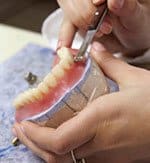
Making quality dentures is a blend of science and art. First, an accurate impression (mold) is made of the alveolar ridges on the top and bottom of your mouth. The base of the denture is made from this mold in a dental laboratory. Working together, the dentist and lab technician choose from among many different sizes and shapes of prosthetic teeth to re-create a natural-looking smile. When everyone is satisfied with the result, the temporary dentures are made in permanent form.
To enable normal speech and eating, it’s crucial to balance your bite. This means that the upper and lower dentures come together and properly stabilize each other. The form and function of the dentures are carefully checked to ensure that they are working and fitting properly.
What to Expect After You Get Dentures
If you’ve recently lost your teeth and received an immediate denture, it’s normal to find some tissue shrinkage and bone loss occurring. Therefore, in several months you may find that your immediate dentures no longer fit well. You will have two choices at this point: You can have your immediate (temporary) dentures re-lined. This means that material is added under the denture’s base to better conform to the new contours of your alveolar ridge. A better option is to move to a set of conventional full dentures, which will last longer and fit better. With proper care, dentures offer a functional, aesthetic and economical solution to the problem of tooth loss.
Interested in learning more? Contact us or schedule an appointment today. Your smile will thank you!
Frequently Asked Questions about Dentures
Will dentures change how my face looks after losing my teeth?
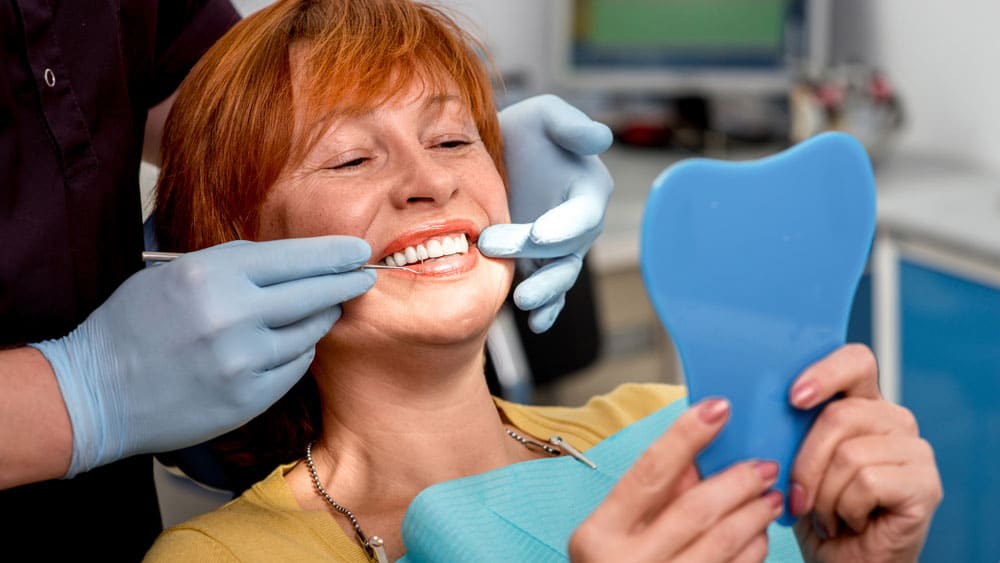
Dentures are designed to restore the natural support that teeth normally provide to your lips and cheeks, helping prevent the sunken look that sometimes develops after tooth loss. It may take a short adjustment period for your face to look and feel balanced with your new dentures, and well-fitted dentures often make patients look more like they did before losing their teeth.
How do I clean and care for my dentures at home?
Clean your dentures daily with a soft-bristled brush and a non-abrasive denture cleaner, never regular toothpaste, which can be too abrasive and scratch the surface. Rinse them after eating, handle them over a folded towel or in a water-filled sink to prevent breakage if dropped, and soak them in a denture-cleaning solution or water overnight so they don’t dry out and lose their shape.
Should I take my dentures out at night while I sleep?
Most dentists recommend removing dentures at night to give your gums and jawbone a chance to rest and reduce the risk of tissue irritation and fungal infections such as denture stomatitis. Store them in water or a denture-soaking solution while they’re out so they don’t dry out and warp overnight.
How long do dentures typically last before they need relining or replacing?
Most dentures have to be relined every few years and be completely replaced every five to ten years because the shape of your jawbone and gum tissue keeps changing over time even after you have lost your teeth. By having regular checkups your dentist is able to detect any changes in the fit at an early stage, since a denture that is loose or has worn down can interfere with chewing and cause discomfort.
Are dental implants a better long-term option than removable dentures?
Dental implants are usually seen as more stable in the long run because they are anchored directly into the jawbone and thus help to maintain bone density, whereas removable dentures rest on the gums and may have to be adjusted from time to time as your mouth changes shape. Although implants generally have a higher initial cost and take longer to treat, the better choice will usually depend on your financial situation, your health, and the amount of bone you have.
Do I need to use denture adhesive, and what does it actually do?
Denture adhesive isn’t required for everyone, but it can improve the seal and stability of a well-fitting denture, especially for lower dentures, which tend to be less stable than upper ones. If you find yourself needing a lot of adhesive to keep your denture in place, that’s usually a sign it needs to be checked and possibly relined, rather than a problem adhesive alone can fix.
Where can I find a denture specialist near Dr. Phillips in Orlando, FL?
Dental Flossophy, located at 7575 Dr. Phillips Blvd. #160 in Orlando, FL, offers full and partial removable dentures, from immediate dentures to implant-supported overdentures. Call (407) 363-0365 to schedule a consultation and find out which type of denture fits your needs.